

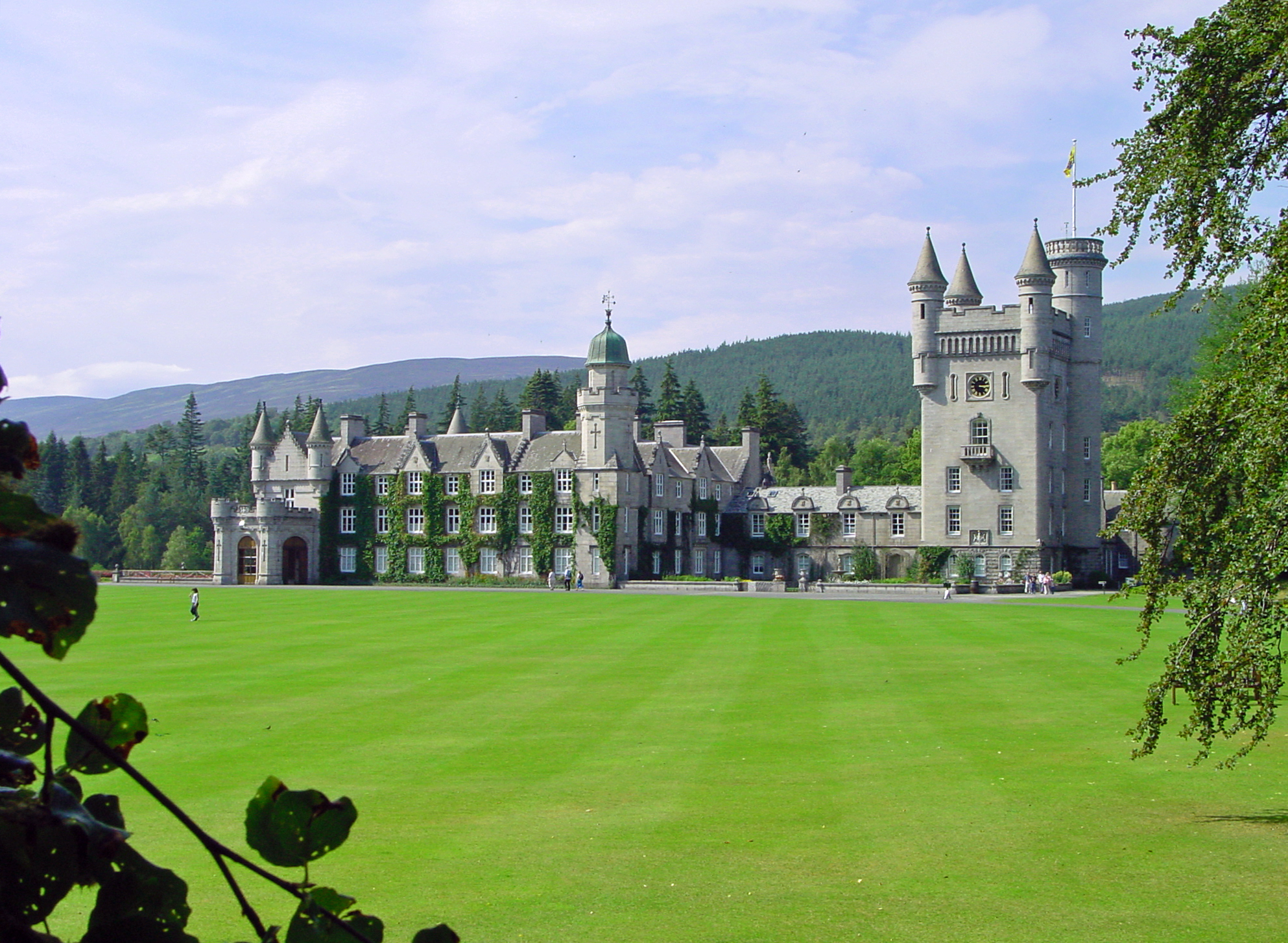

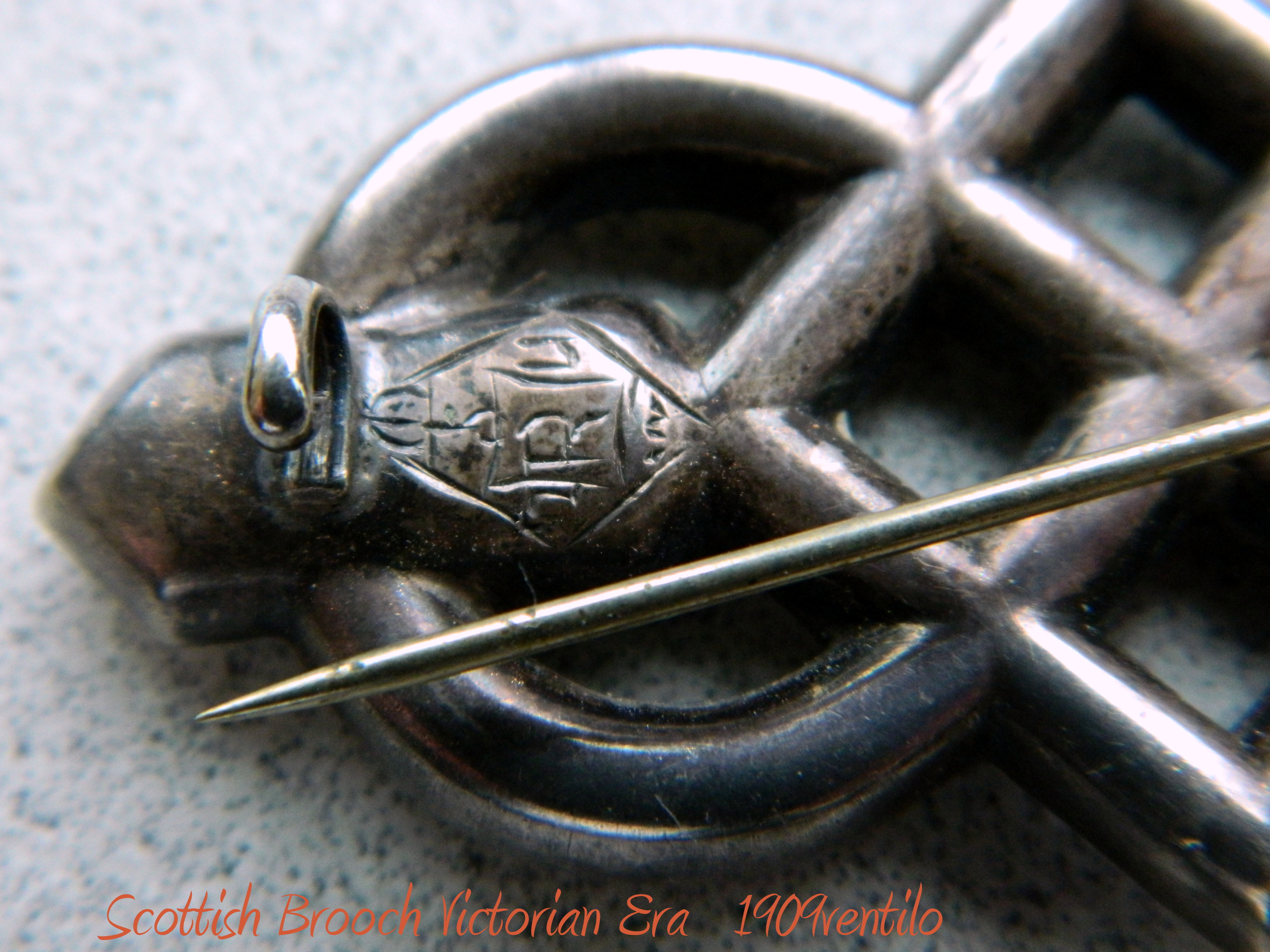
The popularity of Victorian stone or “pebble” jewelry encouraged by Queen Victoria and it began as a souvenir of her trips to Scotland. From the mid-1800s Queen Victoria frequented Scotland and her Scottish castle, Balmoral, and Scotland became a popular place to view the sites, with Scottish dress and jewelry being fashionable, too. By the later 1800s it was being made in England and Germany as well.
http://www.morninggloryantiques.com/collectVictAgate.htm
All varieties of chalcedony were very popular inVictorian Jewelry. Moss agate, known for its green tree-like patterns was a particular favorite. Bloodstone was often used for cameos and intaglios for gentleman’s jewelry. Carnelian, also popular for intaglios, is often found in beads from the Victorian Era. Banded stones like sardonyx and onyx were used extensively for cameos and some of the most interesting beads feature banded agate. The term “hard stone” used in reference to a cameo usually refers to some form of chalcedony.
Victorian Era Scottish jewelry features many and varied combinations of chalcedony cut en cabachon and faceted sent in silver and sometimes gold. Often the pieces are fitted together mosaic style. Scottish agate or pebble jewelry as it is sometimes called, became fashionable after Victoria bought Balmoral Castle in 1848.
http://www.langantiques.com/university/index.php/Chalcedony
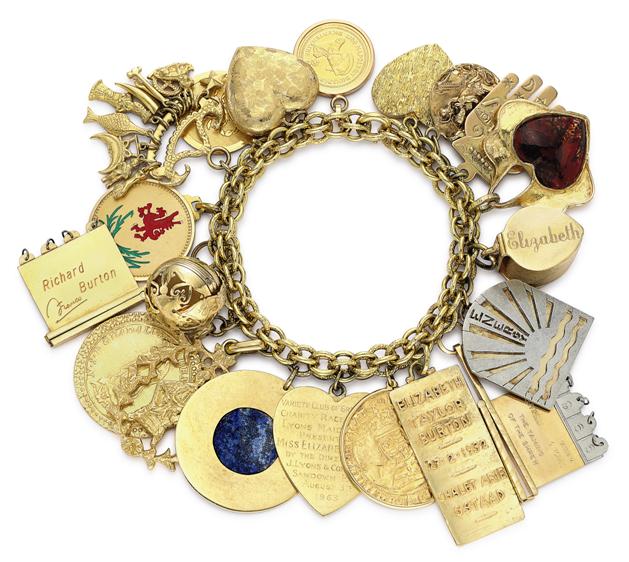
Charmed, I’m sure…… Taylor’s Charm bracelet sells for $326,500!
This gold bracelet of 20 charms includes an engraved clapperboard commemorating “The Taming of the Shrew,” a gold jeweler’s loupe inscribed with Elizabeth’s name, and a gold sphere locket that opens to reveal four medallions—each one engraved with the names and birth dates of each of her four children. Estimate: $25,000 – 35,000
http://www.christies.com/LotFinder/lot_details.aspx?intObjectID=5507876
“In 1910 Herring had married Jessie Markham of Wheeling, West Virginia, whom he had met through his sister. The couple, after a year’s engagement, decided to get married while they were shopping in New York City and were quietly married at the Little Church Around the Corner. In 1919 Herring and his wife bought land outside Princeton which they intended for an equestrian estate; they named it “Rothers Barrows.” They built an “extraordinarily elegant stone house” designed by noted architect Wilson Eyre in the Arts & Crafts style. Eyre also designed the landscaping in the “Chestnut Hill” style characterized by native trees; there was a stone-walled sunken terrace, a croquet lawn, and for the horses a show ring and barn and a 960- yard race track.” http://colcohist-gensoc.org/wp-content/uploads/A_Bloomsburg_Boy_Makes_The_Big_Time.pdf

An important needlework sampler by Mary Antrim of Burlington County, N.J., dated 1807, sold for $1,070,500 recently at Sotheby’s New York because it was the best of an increasingly wanted type and because it came from an important, known collection. Worked in silk and painted paper on linen and signed by the maker in 2 places, it earlier came from the famed Garbish collection of Americana sold at Sotheby’s in 1974. Measuring 17 inches high and 16¾ inches wide, the sampler belongs to a recently recognized important group made by girls of Burlington County in the early 1800s. The frame is original.
* Notes…..Donald Grant Herring a graduate of Princeton University class of 1907, Rhodes Scholar to make Oxford University Rugby team. Herring was a forward on the Oxford Rugby team which beat Cambridge last fall by the record score of 35 to 3, he attracted considerable attention by his athletic as well as social attainments. An English journal cartooned Herring as Sandow because of his powerful physique. Likewise commented on the fact that he is the first Rhodes Scholar to be elected…..I’m not certain what the rest says… very old newspaper!
“Rothers Barrows”, an extraordinarily elegant stone house on Arreton Road. One of Princeton’s best examples of Arts & Crafts style architecture, it was planned as part of a 117-acre equestrian estate by the prominent Philadelphia architect Wilson Eyre. Only 1/3 of the house was finished when construction stopped in 1919.
The original owners, Donald “Heff” Herring and his wife Jesse Markham Herring, moved into the house after World War I. Mr. Herring was Princeton’s first Rhodes Scholar, a member of the University’s faculty, and editor of the “Princeton Alumni Weekly.” The Herrings kept the property until 1939, although the Depression had prevented them from completing the house. In later years, a den, sun room, and portico were added, but the structure is essentially the same as it was in 1919.
Architect Eyre designed the grounds in the “Chestnut Hill” style, characterized by native trees, underplanted with azaleas and rhododendrons. Beyond the elegant stone-walled sunken terrace was a croquet lawn. A show ring was built to the west of the barn complex, along with a 960-yard race track.” http://www.towntopics.com/dec0303/stratton.html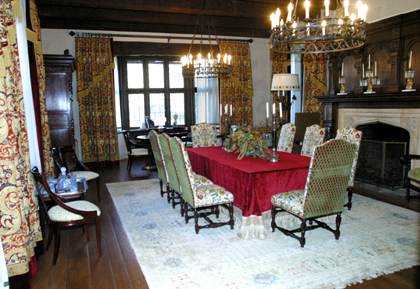

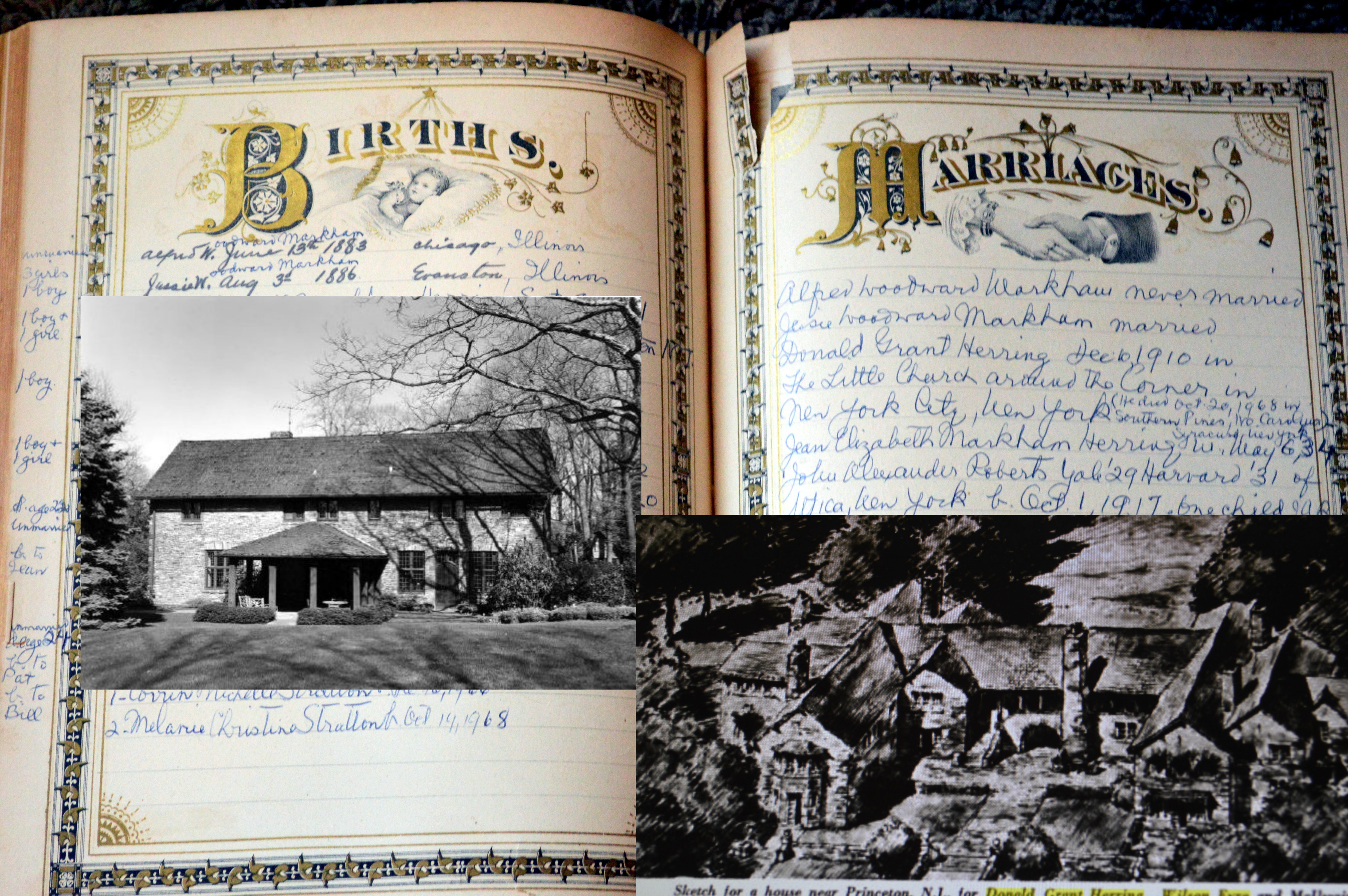
“In 1910 Herring had married Jessie Markham of Wheeling, West Virginia, whom he had met through his sister. The couple, after a year’s engagement, decided to get married while they were shopping in New York City and were quietly married at the Little Church Around the Corner. In 1919 Herring and his wife bought land outside Princeton which they intended for an equestrian estate; they named it “Rothers Barrows.” They built an “extraordinarily elegant stone house” designed by noted architect Wilson Eyre in the Arts & Crafts style. Eyre also designed the landscaping in the “Chestnut Hill” style characterized by native trees; there was a stone-walled sunken terrace, a croquet lawn, and for the horses a show ring and barn and a 960- yard race track.”
MEMORIALS (1918-1962) Donald Grant Herring, Junior, senior geologist for Texaco in Los Angeles, died April 3, 1962, while undergoing surgery at the Good Samaritan Hospital, Los Angeles. Don was born January 12, 1918, on Cleveland Lane, Princeton, New Jersey, about half a block from Grover Cleveland’s house and next door to the home Woodrow Wilson occupied while Governor of New Jersey. Those who knew Don best, realized tha t his youth and academic career were greatly influenced by the tremendous love and respect he held for his father. His father was born in 1886 and graduated from Bloomsberg Pennsylvania High School in 1900 at the age of 14. He then entered Lawrenceville School, one of the oldest boarding schools in America. The three oldest American boarding schools, Andover, Exeter, and Lawrenceville, are all nearing their bicentennials. Don Herring, Jr., was to attend both Lawrenceville and Andover. While a t Lawrenceville, Don’s father was captain of the second team in football. This team contained many members who later won athletic honors in the various universities they attended. Don’s father entered Princeton in 1904 where he was an outstanding scholar and All-American football player and a member of the wrestling team. He was graduated from Princeton, with honors, in 1907 and as a Rhodes Scholar, from Oxford in 1910. He took an M.A. in 1909. He joined the Princeton University Faculty in 1910, having been hired by Woodrow Wilson just prior to Wilson’s election as Governor of New Jersey. He subsequently resigned to accept the post of editor of the Princeton Alumni Weekly, which position he held until he was called to France during World War I as a member of the Ninety Fourth (Hat-In-The-Ring) Aero Squadron. He also served in the United States Army from 1942 till 1946 and is now retired with rank of Colonel. Don Grant Herring, Junior’s first year of school, 1924, was spent a t Miss Fines’, a private school in Princeton. Boasting a student body with an exceptionally high I.Q., Miss Fines’ Private School gave Don, Jr., an excellent start toward his ultimate scholastic excellence. In 1925, Don’s father, his mother, born Jessie Woodward Markham, Don, two elder sisters, Jean and Patricia, and a younger sister, Josephine, now deceased, went to live in St. Jean-de-Luz, France. There Don attended a French Day School for six months and in 1926 the family moved to Burnham-On-Sea, Somerset, England. Here Don entered his third school, Naish House, which was a boarding school for boys, and continued in attendance till 1928, when he was 10 years old. The cultural background of the family and his European travel and schooling contributed greatly to Don’s education. In September, 1928, the family returned to the family farm, Rothersbarrows, which is located three miles north of the Princeton campus. Rothersbarrows was near to Hunts House which is where Washington and Lafayette held their Council of War and planned the Battle of Monmouth. Living amid such a historic back ….http://archives.datapages.com/data/meta/bull_memorials/046/046009/pdfs/1747_firstpage.pdf

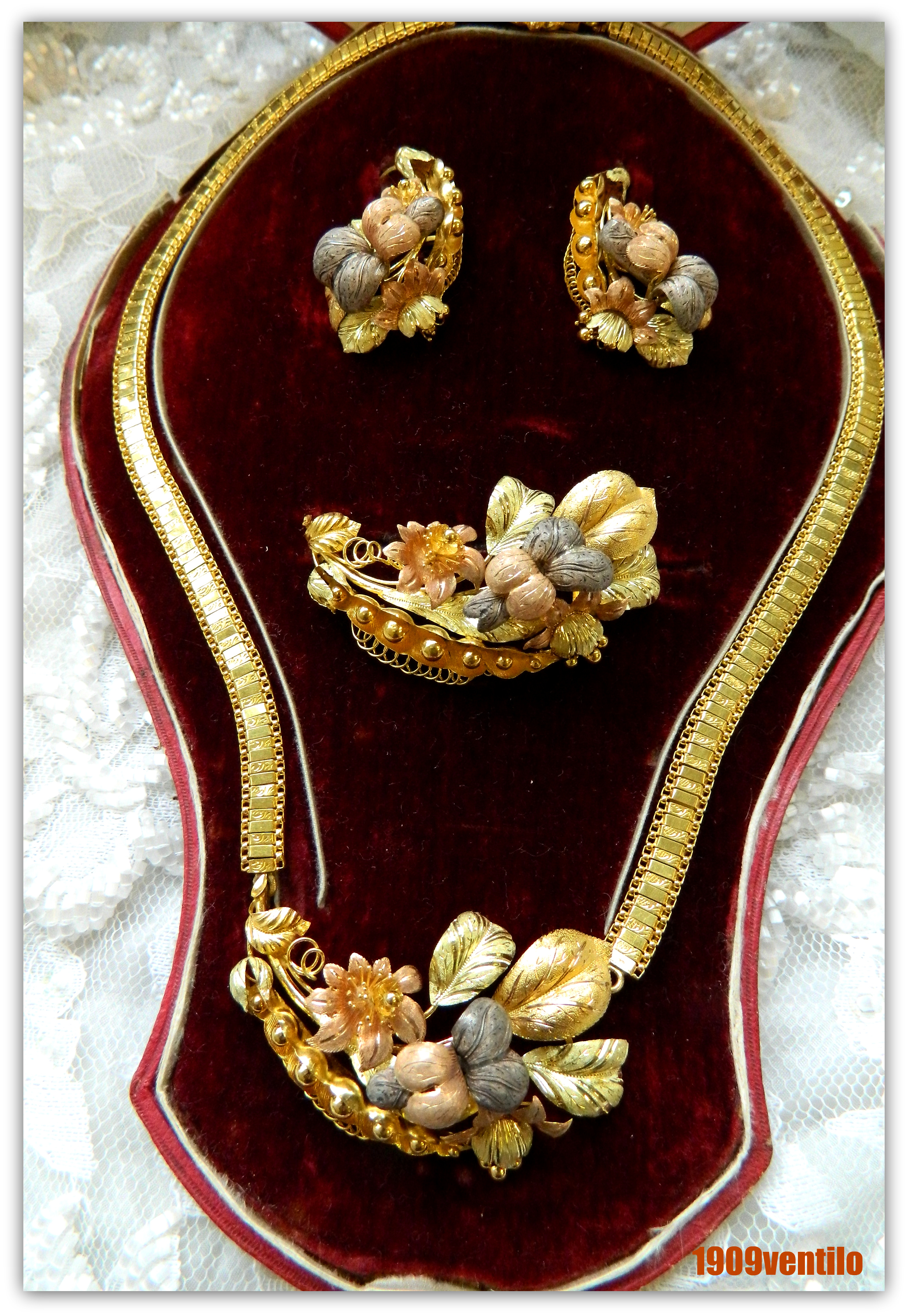
*A cornucopia of entwining leaves, branches, flowers, berries and fruit. The Victorian’s were fascinated by nature.
The unusual original Victorian box adds to the loveliness of this set, 18k tri colored gold, necklace, earrings and brooch Pristine Spectacular condition..
the forbidden fruit.. Victorian era.”Sugar-sweet…sap”… of the fruit.
As found like new in the box.
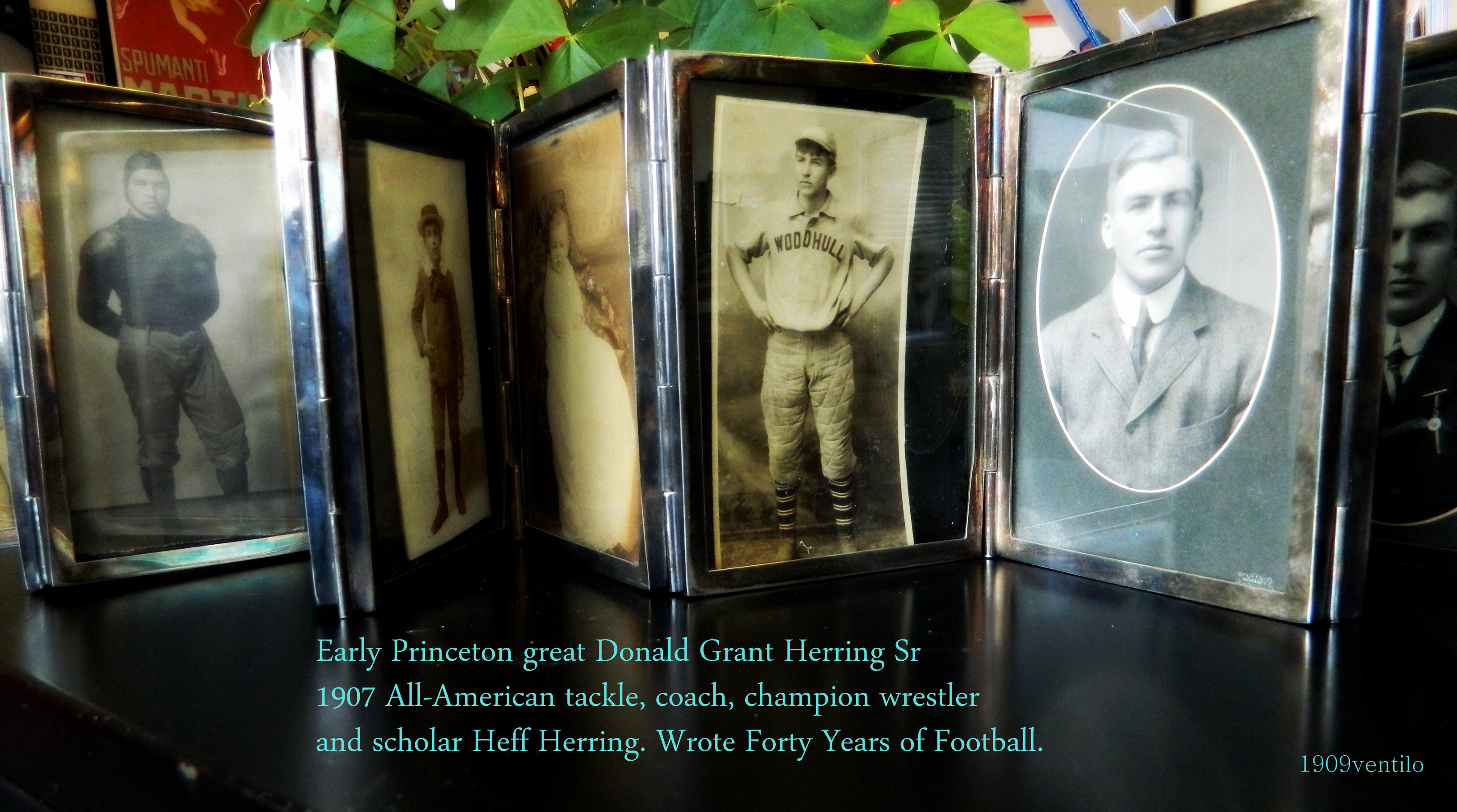
* House Jesse Markham Herring, Donald Grant Herring, Princeton’s first Rhodes Scholar.
“Rothers Barrows”, an extraordinarily elegant stone house on Arreton Road.
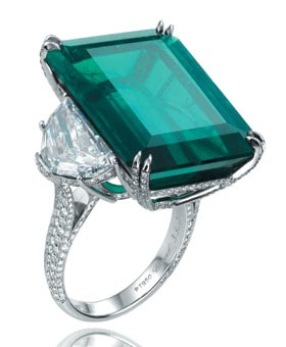
Hong Kong police are searching for an emerald-and-diamond ring worth more than $1.53 million left in a luxury hotel bathroom by a jewelry company executive.
Swiss jeweller Caroline Gruosi-Scheufele, 49, forgot she had taken the ring off to wash her hands after visiting the ladies’ room of the Four Seasons Hotel’s Harbour View ballroom in Hong Kong.
She raced back seven minutes later only to discover it had gone.
The ring has a 16.83 carat emerald sitting between two diamonds of 1.15 and 1.29 carats, with another 674 small diamonds around the band.
A reward of more than $64,000 has been offered for the return of the ring.
There is some speculation that the ring already have passed through one of the many pawn shops in Hong Kong. The local affinity for high stakes gambling means that sudden cash sales of jewels and other valuables are common. http://kaumudiglobal.com
Turquoise, Mood!! ……I bought this great belt buckle on an auction site …. OnlineAuction.com …. Love …. Love..Love it!
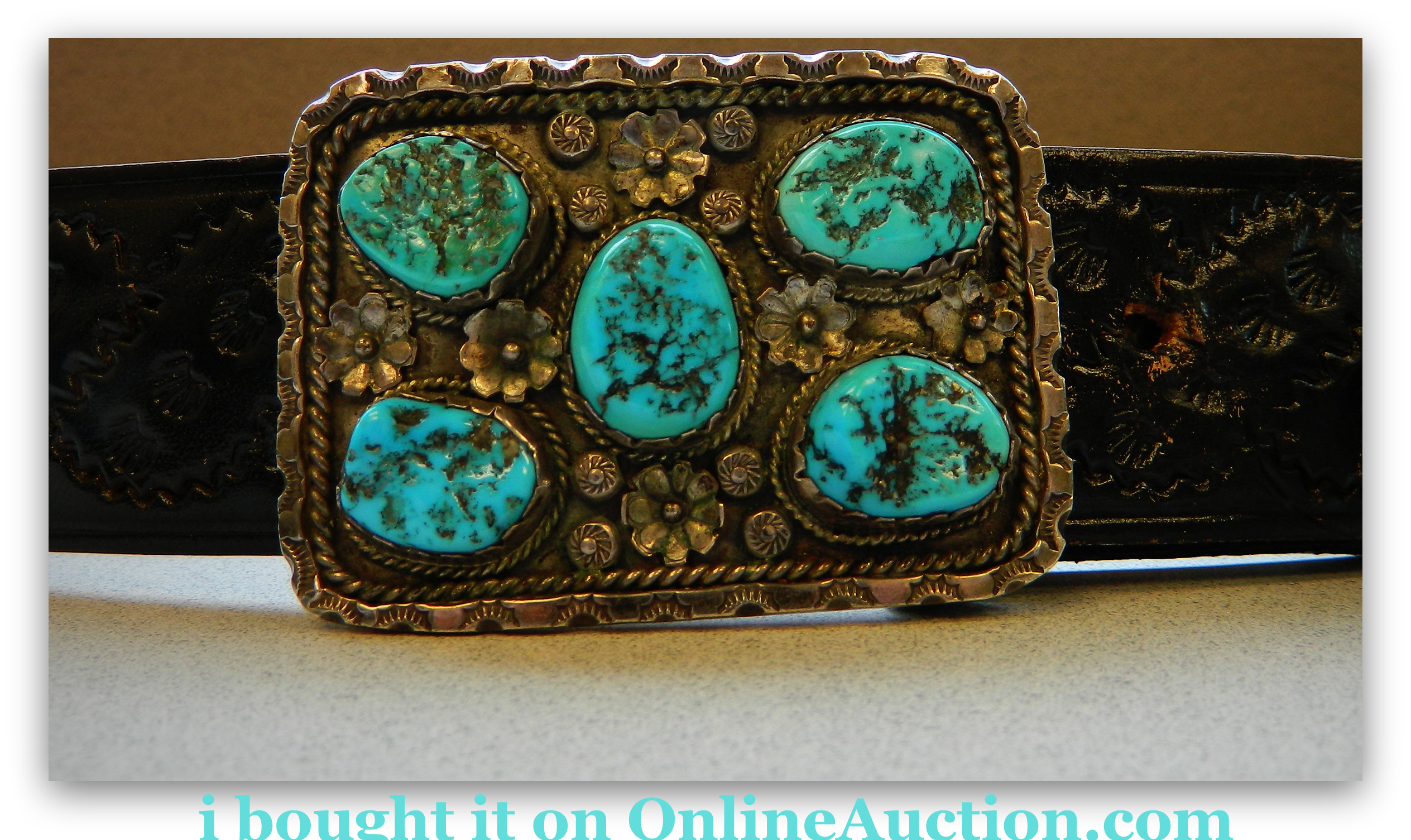
AN MEXICAN SILVER AND TURQUOISE MOUNTED Belt Buckle… BY J. QUIRINO, 20TH CENTURY

"The powers of the mind are memory and imagination: without memory, we have no past; without imagination, no future."
J Bardens


Learning to live authentically in a world that expects perfection
A gaggle of musings and meanderings
Peterborough and Douro Ontario Portrait Photographer
Old World Charm Meets Modern Comforts. Come and Experience the Beauty and History of the Keweenaw.
155a Northcote Road London SW11 6QB Tel 020 7228 6850
... Making Broken Beautiful
393 bushwick ave Brooklyn NY SELLING ON INSTAGRAM @reuseamericany . Open Wednesdays - Sundays 12-5pm We Buy Furniture Every Day +1 (305) 984-1051
Tips and tricks for all your automotive troubles
The Universe is Made of Stories, not Atoms
sharing vulnerability and wearing clothes
DA2697
Just a couple guys running a small farm in the Cascades.
Express yourself. It is later than you think.
A pretty place for personal style, cooking, DIY, and home inspiration.
Designing delightful reading experiences, both innovative and traditional.
Sharing my creative journey...
"People buy tickets to theatres, not movies." -- Marcus Loew
the intersection of graphic design + picture books
Having fun Hunting for vintage treasures!
Creating a beautiful life, one stitch at a time
Unique Destinations, Weird History and More…
I'm K Murphy. I design.
Where Vintage Designer Fashion Meets the Runway
Reflections of a Female Seminary Graduate
Updates, Fashion Finds, News about Nelda's and things we love.
Fine vintage clothing and accessories from 1920s - 1980s
I love my vintage everything!
All your friends are here!
Blogging about Costume Jewelry, Gemstones, Clothing, Shoes, and Accessories
Inspired vintage for you and your home.

 1909ventilo's Blog
