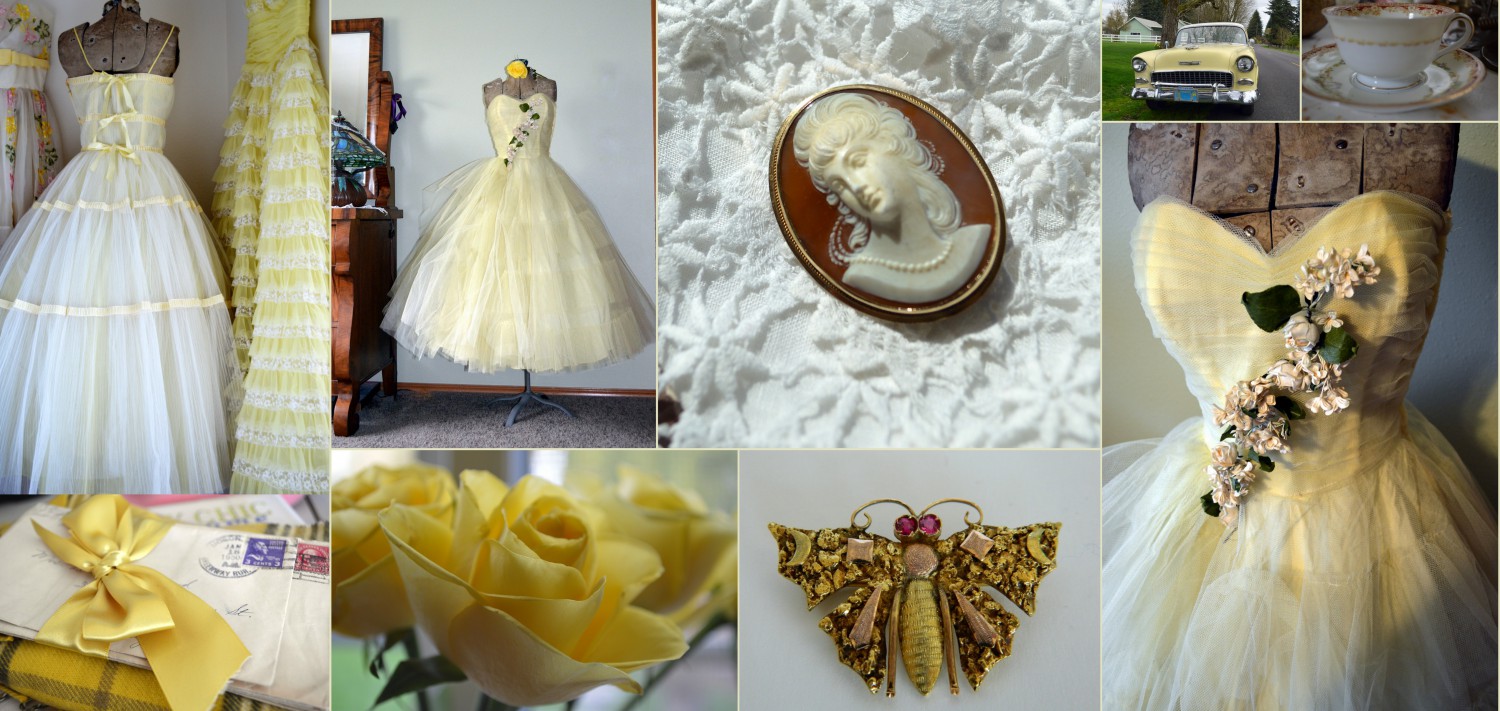

Once upon a time, in a faraway land…. |
|
|
Once upon a time, in a faraway land…. |
|
Princess Diana’s Racy Black Dress Bought By Chilean Fashion Museum For $275,000 facebook Chilean fashion museum for nearly 200,000 pounds (more than $275,000) – several times the original estimate.
The strapless silk taffeta dress’s revealing cut and striking black color caused a minor scandal when Diana was pictured stepping out of a limousine in the outfit in at a London charity event in 1981. But while some thought the dress was too daring for the 19-year-old royal bride-to-be, it helped turn Diana into an overnight fashion icon.
“I think Diana didn’t really have a particular sense of style, I mean, she dressed as a typical ‘Sloane Ranger’ of that time, you know, with the skirts, cardigan, little sweater, pearls, it was kind of a uniform for girls of that age,” said Elizabeth Emanuel, who designed the black dress with her then-husband David.
Emanuel said the couple didn’t anticipate the reaction the dress would draw.
“Royals aren’t supposed to wear black, apart from when in mourning,” she said. “And you know, it was dangerously low … So of course when she did wear it the press went absolutely crazy and every front page had pictures of Diana wearing the black dress stepping out of the car.
“I think from that minute on, Diana became a fashion icon that the press couldn’t wait to see what she would be wearing next.”
The dress was part of a collection that includes the blouse Diana wore for her official engagement portrait in 1981, and the cotton toile prototype of her wedding gown – also designed by the Emanuels – which was used to ensure the fit was just right.
Also for sale were sketches, notes, invoices connected with her wedding to Prince Charles – including the handbag Emanuel carried to the event at St. Paul’s Cathedral on July 29, 1981.
Chile’s Museo de la Moda paid 192,000 pounds (about $276,500) for the dress, a price that includes the buyer’s premium.

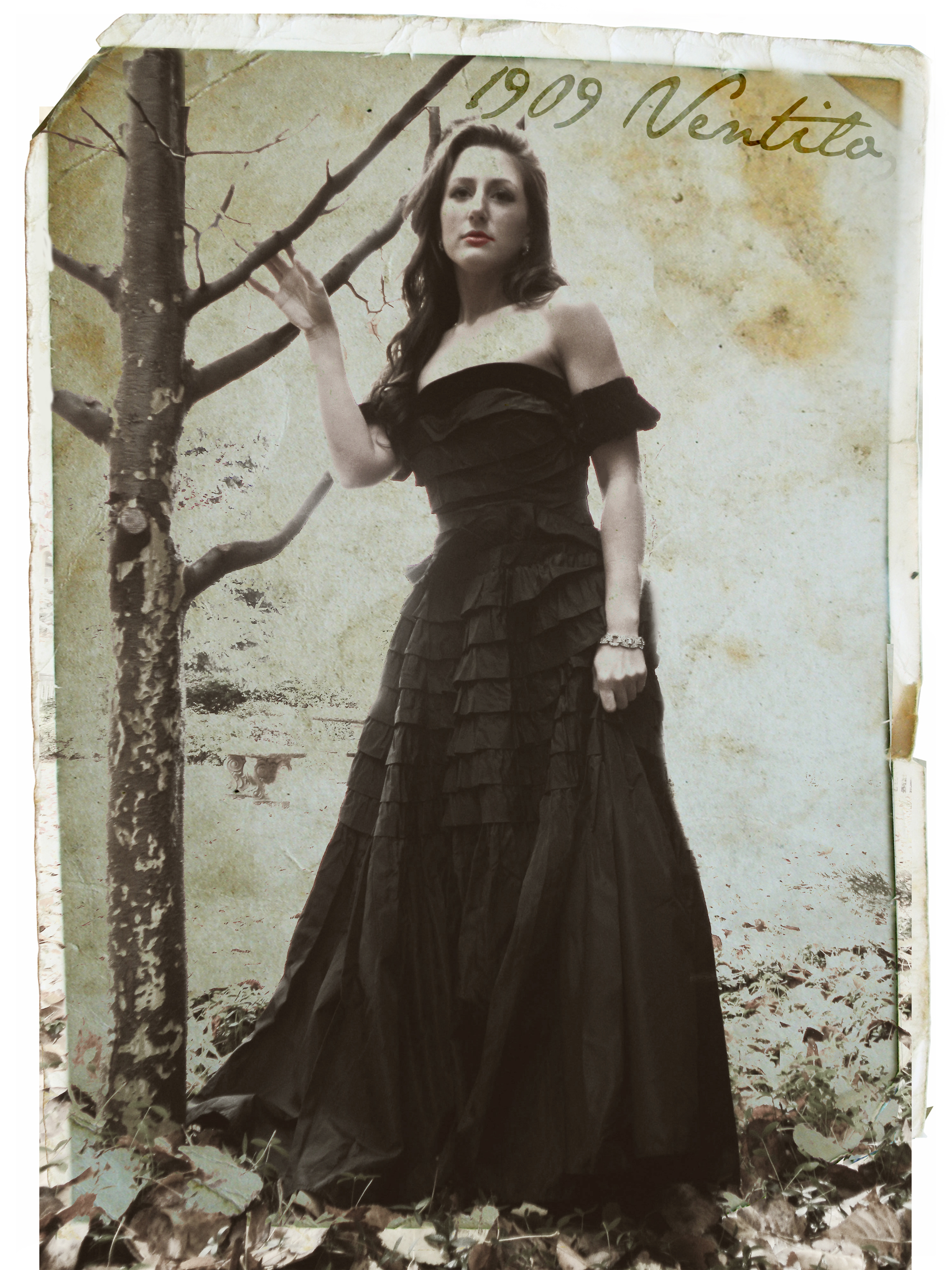

circa 1915: Mrs Evalyn Walsh McLean, one of the owners of the famous Hope diamond, a 44 1/2 carat stone which, legend has it, was taken from the eye of a Burmese idol and is supposed to bring bad luck to anyone who owns it. Mrs McLean died of pneumonia in Washington, aged 60. (Photo by Topical Press Agency/Getty Images)
Most agree that the diamond was originally found by Jean Baptiste Tavernier, a French merchant who traveled through India. Some legends claim that he stole it from an ancient Hindu idol, who then cursed anyone who touched his pilfered treasure. The diamond traveled through history from there: sometimes gifted, sometimes stolen, and always a coveted item.
It has been noted as the source of all kinds of bad luck – the beheading of King Louis XVI and his wife Marie Antoinette, the gambling debts of Britain’s King George IV, and the lonely unmarried life of Henry Phillip Hope, who inherited the blue diamond in the early 1800s. Nearly every member of the Hope family is rumored to have died in poverty, which led to the sale of the (officially titled) Hope Diamond in 1901.
Shortly thereafter, the famous jeweler Pierre Cartier found a potential buyer in Mrs. Evalyn Walsh McLean. She reportedly believed that objects considered “bad luck” always gave her extra goodluck, so Cartier made sure to embellish the history of the haunted Hope Diamond. Despite her confidence, she was struck by one tragedy after another throughout the rest of her years.

Evalyn Walsh McLean (August 1, 1886 in Leadville, Colorado, – April 24. 1947 in Washington, D.C.) was an American mining heiress and socialite who was famous for being the last private owner of the 45-carat Hope Diamond as well as another famous diamond, the 94-carat Star of the , the daughter of Thomas Walsh who had made a fortune gold-mining in Colorado. After a childhood in mining camps, she’d been given the finest education money could buy.
She married a man almost as rich as her father, the newspaper heir Edward McLean. In the summer of 1910, soon after their first child was born, the McLeans visited Paris where Pierre Cartier showed them the Hope Diamond.
Evalyn did not like the way it was set, but Cartier was not discouraged. He had it reset as the centrepiece of a necklace of brilliant white diamonds, and that October travelled with it to New York New York, state, United States.
He brought with him documents describing the diamond’s history, which he asked Evalyn to look at alongside the necklace, suggesting she kept both for the weekend.
The strategy worked: by Monday Evalyn had decided she wanted the necklace, and in the spring of 1911 a price of $180,000 (equivalent to [pound]5 million) was agreed.
Evalyn, aware of its reputation, took the diamond to a priest to have it blessed as soon as she bought it. From then on, she wore it constantly, often along with the other diamonds she collected.
One photograph shows her wearing the Hope necklace with two others, diamond earrings, diamond clips and a wristful of diamond bracelets. ‘I might as well put it all on at once and then I know where it is,’ she would say.
But although she did not believe in the Hope’s malign influence, her life was marred by tragedy.
Her brother died young, her elder son – whose birth was celebrated by the purchase of the Hope necklace – died in a car accident when he was nine, her husband began to drink heavily and the marriage ended in divorce, and her only daughter died of an overdose, in 1946, at the age of 25.
Shattered by these tragedies, Evalyn died from pneumonia the following year.
Her death occurred on a Saturday, when the banks were shut, and her executors, who had discovered the Hope necklace hidden in the back of her tabletop radio, could not think how to keep it safe until the following Monday.
They appealed to the head of the FBI, J. Edgar Hoover Noun 1. J. Edgar Hoover – United States lawyer who was director of the FBI for 48 years (1895-1972)
John Edgar Hoover, Hoover , who allowed them to keep it in an FBI safe.
Evalyn’s jewellery – all 74 pieces – was bought in April 1949 by the New York jeweller Harry Winston for $1.5 million. Nine years later, he presented the Hope Diamond to the National Museum of Natural History.
The National Museum of Natural History in Washington DC, sending it by recorded delivery.
The postman who delivered it, James Todd, subsequently had his leg crushed by a lorry.
Today, cleaned and buffed, its 74 facets glittering in its diamond and platinum setting, the Hope Diamond rotates slowly in its beige marble display case. It has drawn more visitors than any other exhibit.
The authorities are taking no chances with its safety. The first line of defence is the thick, crystal clear glass (like that behind which the British Crown Jewels can be seen), but with any hint of a threat the Hope Diamond would drop into the first of a series of vaults concealed in the base of the case, their combinations changed daily.
AND IT never ceases to delight nor to confound. In 1965, the diamond firm De Beers discovered that after exposure to ultraviolet light Ultraviolet light
A portion of the light spectrum not visible to the eye. Two bands of the UV spectrum, UVA and UVB, are used to treat psoriasis and other skin diseases. , the Hope Diamond glows like a red-hot coal for several minutes.
No one knows why this happens.
According to the head of Mineral Sciences at the Smithsonian: ‘ Nothing like this has been known to happen with any other diamond.’ But there never has been a gem quite like the Hope diamond.
What is it worth? Some experts estimate up to [pound]215 million. But as Jeffrey Post, curator of America’s national gem collection, says: ‘How can you put a value on something of such history and extraordinary attraction? It’s priceless.’ But perhaps its true costs can be measured in the lost lives that have followed it through history.
Byline: ANNE DE COURCY
Stunning vintage designer clothes. Plus, how to tell if your Hermes bag is fake


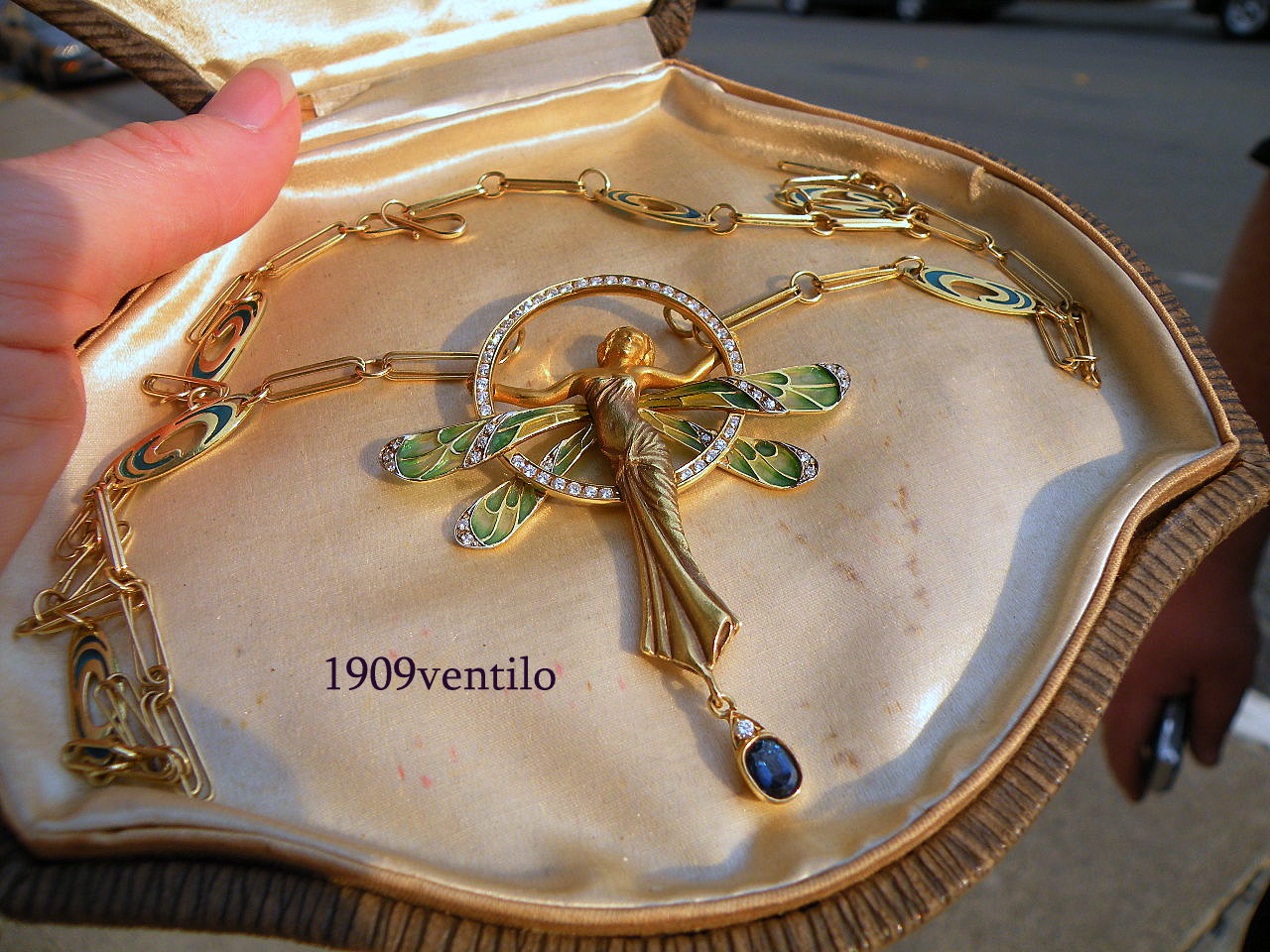

Audrey Tautou will star as Coco Chanel in a $15 million biopic about the legendary French fashion designer. Tautou made a name for herself in the highly regarded 2001 film Amelie. She is a perfect choice for the role of Coco both in appearance and ability. The film, which will focus on Chanel’s childhood and early womanhood, was specially conceived with Tautou in mind.
The woman who invented French chic was born into poverty as Gabrielle Chanel, the illegitimate daughter of a traveling salesman, in 1883. After the death of her mother and abandonment by her father she spent seven years in a Catholic orphanage, where she learned to sew. But fashion wasn’t her first career choice. As a young woman, Chanel had ambitions to be a singer and it was while warbling “Who’s Seen Coco in the Trocadero” in a cabaret that she acquired the nickname Coco.
While working as a cabaret singer, she also took to sewing the stage clothes for the likes of French cabaret star Mistinguette before being taken under the wing wealthy Balsan. His chateau became Chanel’s home and her gateway to a new life.
![[Captured11.jpg]](https://i0.wp.com/4.bp.blogspot.com/_TyGGVkFpFb0/SdIsq_a48oI/AAAAAAAAC9U/npeFqfF6qrU/s1600/Captured11.jpg) I remember what Father used to say: “If you see a man drowning, you must try to save him–even if you can’t swim.”
I remember what Father used to say: “If you see a man drowning, you must try to save him–even if you can’t swim.”
“Another Holocaust story?” might be an understandable reaction to “The Courageous Heart of Irena Sendler,” but that would do a disservice to this fine Hallmark Hall of Fame production. It’s hard to think, in fact, of a story possessing a more poignant connection to the next “send the very best” holiday — Mother’s Day — chronicling as it does Polish Jews who gave up their children in the face of the growing Nazi threat, and Christians who selflessly took them in. So yes, by all means, another Holocaust story, provided that it’s this true, gripping and unfamiliar.
http://www.variety.com/review/VE1117940063.html?categoryid=32&cs=1
watch the trailer
 James Hayllar (1829-1920) Easter flowers Price Realized £1,500 ($2,285) Price includes buyer’s premium Estimate£1,200 – £1,800 ($1,806 – $2,709) Sale InformationSale 5615 Victorian and British Impressionist Pictures 17 March 2010 London, South Kensington Contact the Department Lot Description James Hayllar (1829-1920) Easter flowers signed with monogram and dated ‘1861’ (lower right) oil on panel 8 x 6 in. (20.2 x 15.2 cm.). Provenance with Beaton-Brown, London. Anonymous Sale; Christie’s, London
http://www.christies.com/LotFinder/lot_details.aspx?intObjectID=5296245
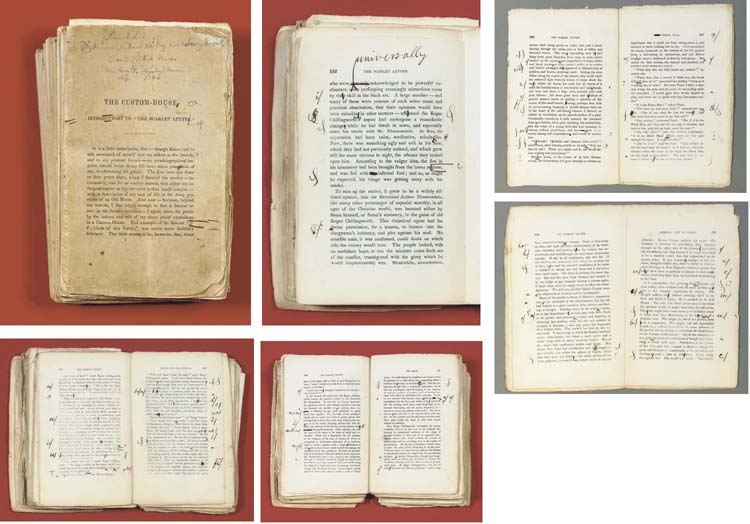 “The The discovery of the corrected page proofs for The Scarlet Letter constitutes a significant literary find. Hawthorne’s original handwritten manuscript, used as printer’s copy, is known to have been burnt after it was returned by Fields, the publisher, to its author. Later, in the postscript of a letter to Fields, Hawthorne explained that “the M.S. of the Scarlet letter was burnt long ago.” More graphically, he told the publisher’s widow, Annie Adams, that “I put it up the chimney.” (See Matthew J. Bruccoli, “Notes on the Destruction of The Scarlet Letter Manuscript,” in Studies in Bibliography, 20 [1967], pp. 257-259). Only the leaf bearing Hawthorne’s manuscript titlepage and table of contents survives, at the Pierpont Morgan Library (illustrated in H. Cahoon, T.V. Lange and C. Ryskamp, American Literary Autographs, no.26). Up to now, the sole text source for this novel was the first printing. Author’s corrected proofs of this period almost never survive; most having been discarded in the standard practice of publication. The textual study of these previously unknown corrected proofs may permit a reassessment of Hawthorne’s working methods in the writing and editing of his greatest novel and may perhaps suggest readings different from those in the standard edition of this classic American work.
In 1845 Hawthorne left the transcendentalist experiment at Brook Farm and returned to Salem, where he obtained through Franklin Pierce–a Bowdoin college classmate–an appointment as surveyor of the Boston Custom House, but he was summarily dismissed when a new administration took office, leaving him in severe financial straits. Though he had been very disappointed with the poor reception and lackluster sales of his previous writings, he began work on what he termed a “hell-fired story.” In the winter of 1849, the young Boston publisher James T. Fields visited Hawthorne in Salem. When asked about his recent literary efforts, Hawthorne scoffed, pointing out that the publishers were still trying to sell off a small edition of his Twice-Told Tales. “Who would risk publishing a book for me, the most unpopular writer in America?” he complained. Fields responded “I would,” and promised an edition of 2,000 copies of anything Hawthorne might write. As Fields was departing, Hawthorne produced from his desk a roll of manuscript of an unfinished novel, telling Fields “It is either very good or very bad–I don’t know which.” As Fields later recalled, “on my way up to Boston I read the germ of “The Scarlet Letter”; before I slept that night I wrote him a note all aglow with admiration of the marvelous story he had put in my hands, and told him I would come again to Salem the next day and arrange for its publication” (Fields, Hawthorne, Boston, 1876, pp.18-20). On 8 January 1850, Hawthorne promised to send copy for the printers, but complained that he could not think of a title for the work. By 15 January he had sent to Fields all but three chapters [see below] and warned that “the proof-sheets will need to be revised,” and added, “I write such an infernal hand that this is absolutely indispensable” (Letters 1843-1853, ed. Woodson et al, p.305. On 3 February 1850, Hawthorne finished reading the new novel to his wife, Sophia. “It broke her heart,” he wrote, “and sent her to bed with a grievous headache, which I look upon as a triumphant success.”
In spite of Fields’s enthusiasm, Hawthorne remained pessimistic about the reception of the book, and cautioned his friend, Horatio Bridge, that while “some portions of “The Scarlet Letter” are powerfully written,” still “my writings do not, nor ever will, appeal to the broadest class of sympathies, and therefore will not obtain a very wide popularity” (Letters 1843-1853, p.311). The novel, later lauded by Henry James as, “the finest piece of imaginative writing yet put forth in the country,” was an immediate and lasting success in spite of the fact that it dealt with a subject–adultery–not often made explicit in contemporary fiction. When it was published on 16 March 1850, it proved an immediate success, selling 2,500 copies in its first week of publication; a second printing of 2,500 copies followed a month later. See C. E. Frazer Clark, Jr., Nathaniel Hawthorne: A Descriptive Bibliography, A.16.1. Information taken from Christies click on link below.
http://www.christies.com/LotFinder/lot_details.aspx?intObjectID=4467940
Buy the book! http://www.onlineauction.com/index.php?page=auction:view_item&auction_id=1148830
I have a wonderful Necklace given to Ginger Rogers from Fred Astaire. We bought these items from her estate some years ago. We also have the “Roxie Hart” original poster that hung in her home and some other memorabilia. “The most important thing in anyone’s life is to be giving something. The quality I can give is fun, joy and happiness. This is my gift.” Read her fascinating bio ….http://www.gingerrogers.com/about/bio.html


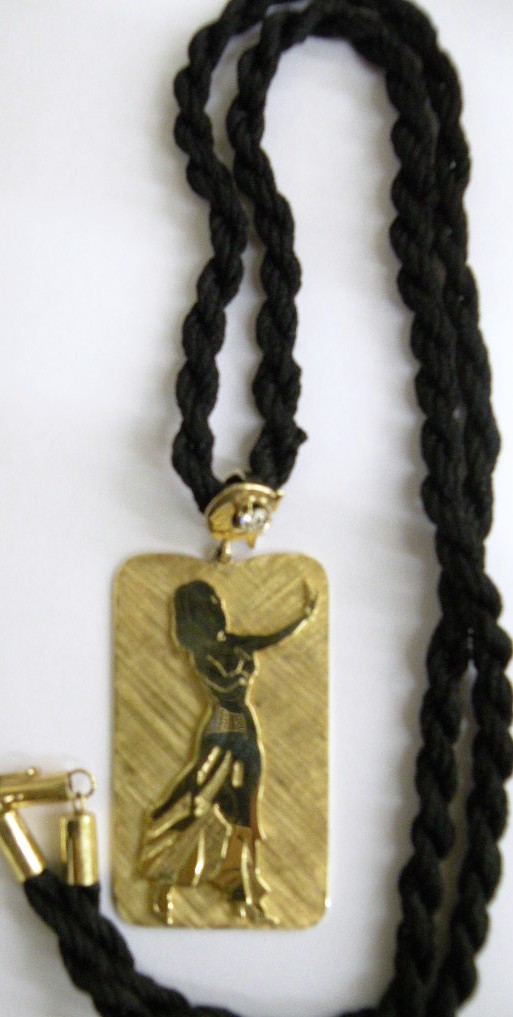
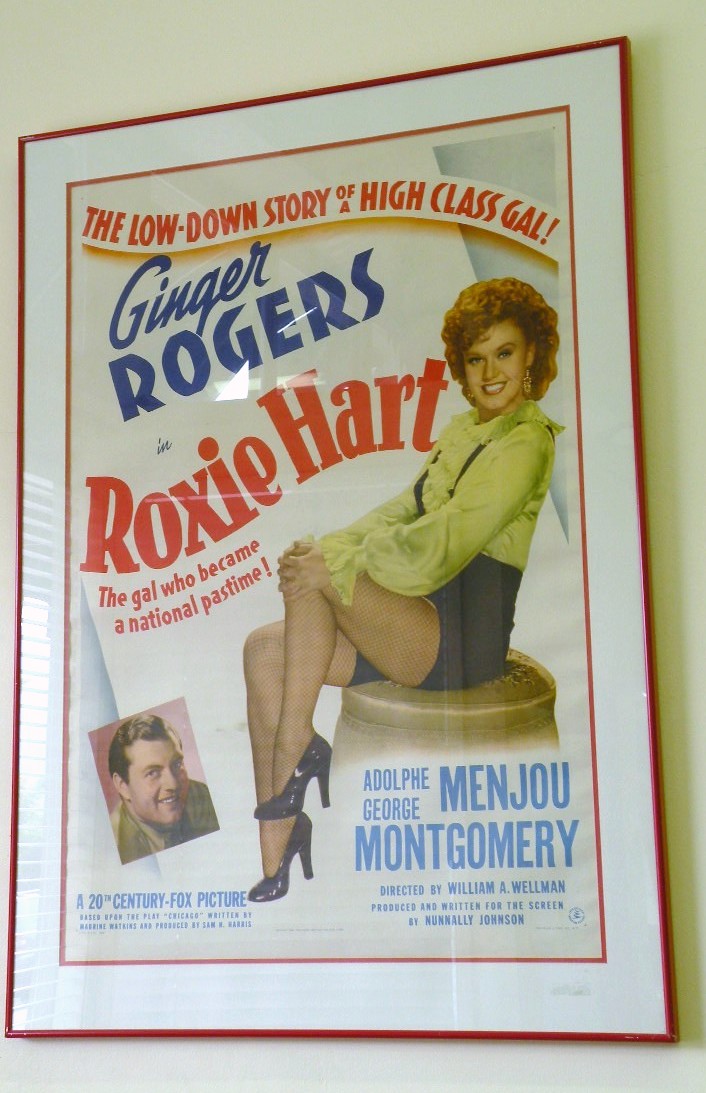
Check out my shop http://www.onlineauction.com/index.php?page=auction_house:main&user_id=12
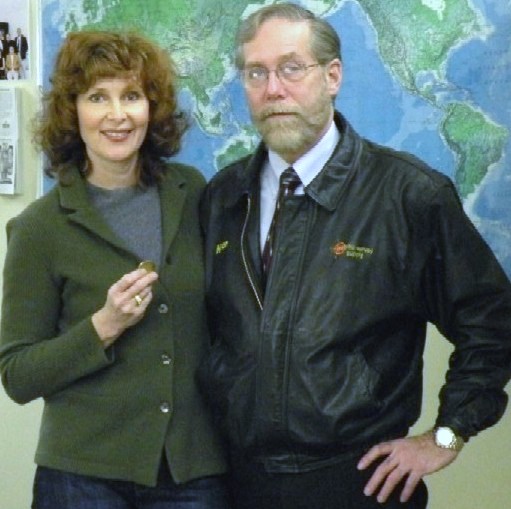
Have you ever been to a dinner party seated next to a person who extravagantly boasts about the things they have done? Yet, across from where you sit the humble gentleman who never says a word, if he did therein would lie the extraordinary story that you would love to hear. The Hunley, have you heard of it? My friend Doug Devine director of OnlineAuction.com could tell you of it, of course you would have to ask, Mr. Devine has accomplished many things but the Hunley is what I want to talk of. The Hunley was the confederate state submarine sunk in its final battle February 17, 1864. The hand-cranked Hunley sank the Union blockade ship Housatonic, becoming the first submarine in history to sink an enemy war ship. The H.L. Hunley and its eight-man crew were preserved for more than 140 years under silt.
Life has its surprises, doesn’t it? Getting a call to be a part of this historical project probably wasn’t what Doug thought his day would entail as he drank his coffee that morning. Mr. Devine owner of Pacific Survey has been involved with measuring technologies for more than 25 years; he was instrumental in the raising of the Hunley. Using computer models, advanced measuring and analytical instrumentation the recovery plans were developed to ensure the safety of this historical project – the only one of its kind on the planet today. August 8, 2000 was a joyful day in Charleston. After five years of planning and fund-raising the Hunley was raised from beneath 3 feet of sand and 27 feet of water from its resting place, four miles off Sullivan’s Island. The tube-shaped boat was forty feet long and four feet deep. There was barely enough room for eight men. Inside, the men would use candles for light; they would sit on a wood bench and turn a shaft that moved the propeller. The Hunley’s whereabouts remained unknown until divers, funded by author Clive Cussler, discovered the sunken vessel in 1995, 4 miles off the Carolina coast.
If you read the fascinating story about the Hunley and crew member George Dixon you will hear of the famous gold coin that Queenie Bennett gave him “Hold this keepsake close, to remember my love and bring you good luck.” This was 1864 and George was leaving Mobile, Alabama to fight with the Confederate Army of the South. It’s rumored George slipped the gold coin into the left pocket of his trousers, and in the fierce fight at the Battle of Shiloh he was shot, he fell to the ground but the gold coin stopped the bullet and saved his life. Later, he had the coin inscribed “Shiloh April 6, 1862, My Life Preserver.” Please read the whole story “The Story of the H.L Hunley and Queenie’s Coin” by Fran Hawk. The coin is on display today at the Hunley Exhibit. You must learn of Horace Hunley, a wealthy Southerner who lived in Mobile, and helped George Dixon and others build and pay for the submarine the H.L. Hunley. Of course, if you know me at all you know I tend to be a romanticist. Queenie did eventually remarry but I wonder if her heart was forever broken just like the broken vessel that lay mysteriously unearthed in the Atlantic Ocean all those years. I plan to someday go to the museum and see it for myself.
I’m sure there was much speculation that a tiny vessel could sink the great USS Housatonic Union Ship. The same speculation that the Hunley would even be found, let alone raised and preserved. But a few people with a vision that stayed steadfast in what they believed did it. That’s what Mr. Devine brings to our company, a vision and positive attitude to get the job done even when others say it can’t be done.
I love the quote by Isabelle De Borchegrave who says, “No one truly invents anything; you always build on the Past.”

Miss Queenie Bennett who was the young sweetheart of Lt. George E. Dixon (the Hunley’s last skipper) and of the twenty-dollar gold piece she had given him. It is probably among his bones in the wreckage of the submarine, as the coin had become a good luck piece after it stopped a Yankee bullet, thus saving his life at the Battle of Shiloh.


"The powers of the mind are memory and imagination: without memory, we have no past; without imagination, no future."
J Bardens


Learning to live authentically in a world that expects perfection
A gaggle of musings and meanderings
Peterborough and Douro Ontario Portrait Photographer
Old World Charm Meets Modern Comforts. Come and Experience the Beauty and History of the Keweenaw.
155a Northcote Road London SW11 6QB Tel 020 7228 6850
... Making Broken Beautiful
393 bushwick ave Brooklyn NY SELLING ON INSTAGRAM @reuseamericany . Open Wednesdays - Sundays 12-5pm We Buy Furniture Every Day +1 (305) 984-1051
Tips and tricks for all your automotive troubles
The Universe is Made of Stories, not Atoms
sharing vulnerability and wearing clothes
DA2697
Just a couple guys running a small farm in the Cascades.
Express yourself. It is later than you think.
A pretty place for personal style, cooking, DIY, and home inspiration.
Designing delightful reading experiences, both innovative and traditional.
Sharing my creative journey...
"People buy tickets to theatres, not movies." -- Marcus Loew
the intersection of graphic design + picture books
Having fun Hunting for vintage treasures!
Creating a beautiful life, one stitch at a time
Unique Destinations, Weird History and More…
I'm K Murphy. I design.
Where Vintage Designer Fashion Meets the Runway
Reflections of a Female Seminary Graduate
Updates, Fashion Finds, News about Nelda's and things we love.
Fine vintage clothing and accessories from 1920s - 1980s
I love my vintage everything!
All your friends are here!
Blogging about Costume Jewelry, Gemstones, Clothing, Shoes, and Accessories
Inspired vintage for you and your home.


 1909ventilo's Blog
