
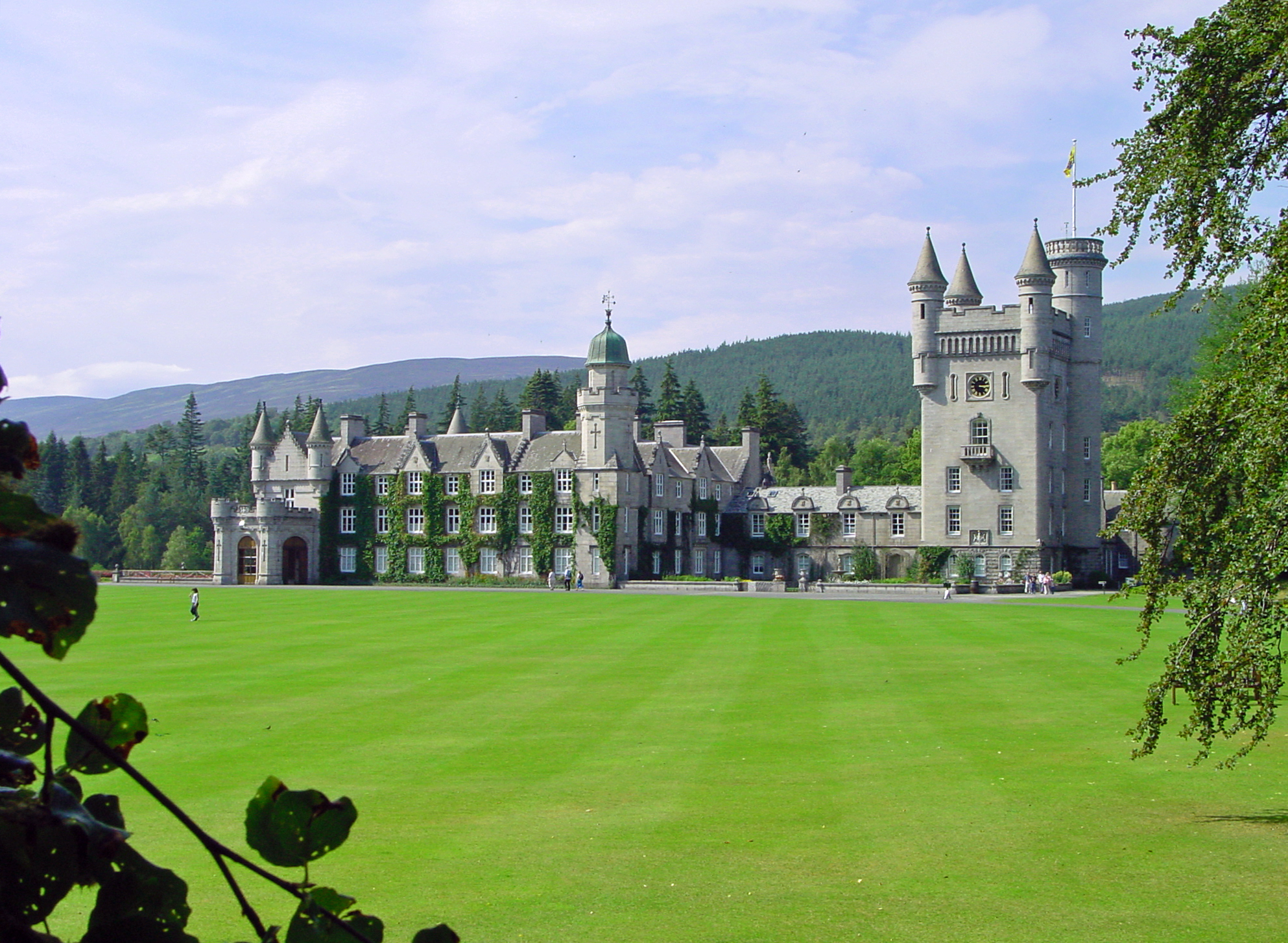
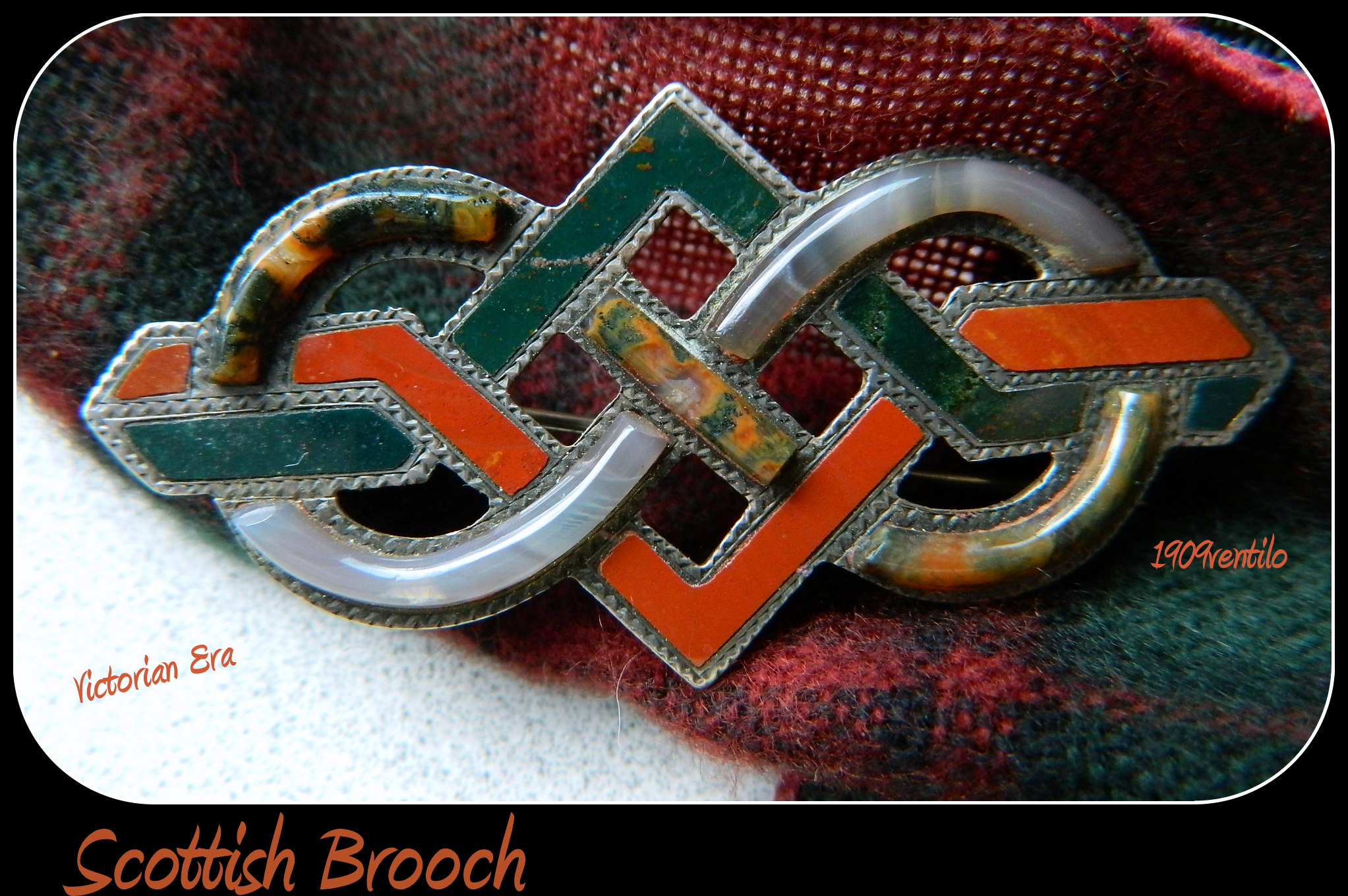
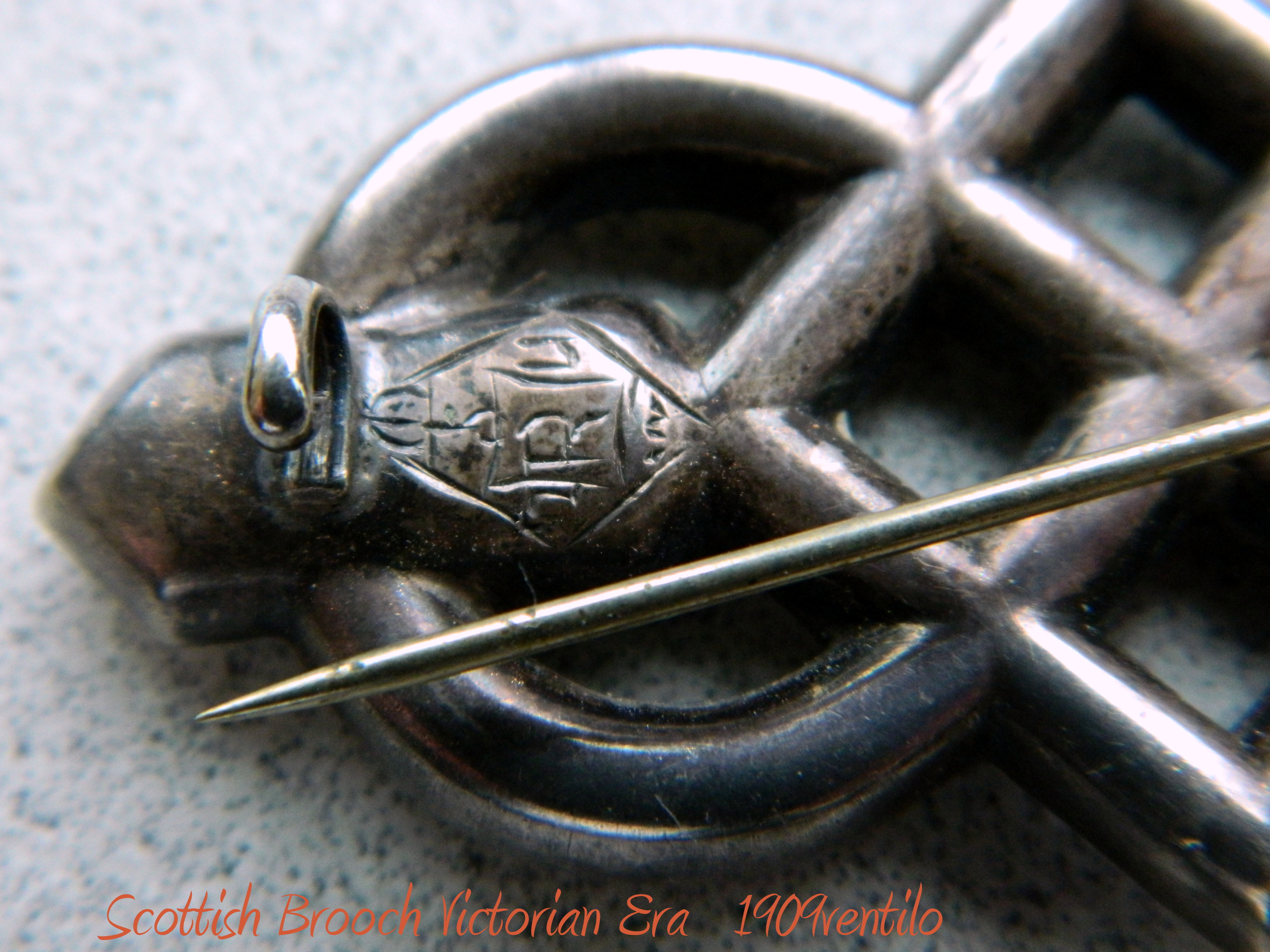
The popularity of Victorian stone or “pebble” jewelry encouraged by Queen Victoria and it began as a souvenir of her trips to Scotland. From the mid-1800s Queen Victoria frequented Scotland and her Scottish castle, Balmoral, and Scotland became a popular place to view the sites, with Scottish dress and jewelry being fashionable, too. By the later 1800s it was being made in England and Germany as well.
http://www.morninggloryantiques.com/collectVictAgate.htm
All varieties of chalcedony were very popular inVictorian Jewelry. Moss agate, known for its green tree-like patterns was a particular favorite. Bloodstone was often used for cameos and intaglios for gentleman’s jewelry. Carnelian, also popular for intaglios, is often found in beads from the Victorian Era. Banded stones like sardonyx and onyx were used extensively for cameos and some of the most interesting beads feature banded agate. The term “hard stone” used in reference to a cameo usually refers to some form of chalcedony.
Victorian Era Scottish jewelry features many and varied combinations of chalcedony cut en cabachon and faceted sent in silver and sometimes gold. Often the pieces are fitted together mosaic style. Scottish agate or pebble jewelry as it is sometimes called, became fashionable after Victoria bought Balmoral Castle in 1848.
http://www.langantiques.com/university/index.php/Chalcedony

"The powers of the mind are memory and imagination: without memory, we have no past; without imagination, no future."
J Bardens


Learning to live authentically in a world that expects perfection
A gaggle of musings and meanderings
Peterborough and Douro Ontario Portrait Photographer
Old World Charm Meets Modern Comforts. Come and Experience the Beauty and History of the Keweenaw.
155a Northcote Road London SW11 6QB Tel 020 7228 6850
... Making Broken Beautiful
393 bushwick ave Brooklyn NY SELLING ON INSTAGRAM @reuseamericany . Open Wednesdays - Sundays 12-5pm We Buy Furniture Every Day +1 (305) 984-1051
Tips and tricks for all your automotive troubles
The Universe is Made of Stories, not Atoms
sharing vulnerability and wearing clothes
DA2697
Just a couple guys running a small farm in the Cascades.
Express yourself. It is later than you think.
A pretty place for personal style, cooking, DIY, and home inspiration.
Designing delightful reading experiences, both innovative and traditional.
Sharing my creative journey...
"People buy tickets to theatres, not movies." -- Marcus Loew
the intersection of graphic design + picture books
Having fun Hunting for vintage treasures!
Creating a beautiful life, one stitch at a time
Unique Destinations, Weird History and More…
I'm K Murphy. I design.
Where Vintage Designer Fashion Meets the Runway
Reflections of a Female Seminary Graduate
Updates, Fashion Finds, News about Nelda's and things we love.
Fine vintage clothing and accessories from 1920s - 1980s
I love my vintage everything!
All your friends are here!
Blogging about Costume Jewelry, Gemstones, Clothing, Shoes, and Accessories
Inspired vintage for you and your home.

 1909ventilo's Blog