Posted at 4:31 pm by 1909ventilo, on August 12, 2010
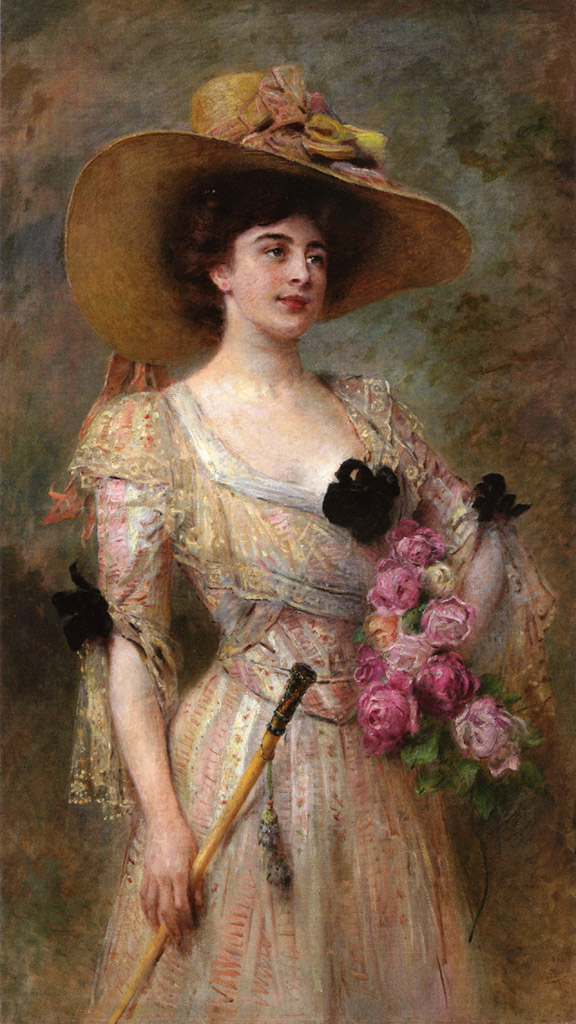
.” “In from a stroll” (estimate: $400,000-$600,000) depicts a well-dressed young woman, who has seemingly just returned from collecting roses. At a glance it is readily clear that the artist is less interested in capturing the psychology and minute details of the figure than in conveying the idealized beauty of the figure and a general sense of calm in the atmosphere. Makovsky’s dynamic brushstrokes and emphasis on light are evidence of the influence that Impressionist paintings and artists had on his technique following his visit to Paris earlier in his life. The painting seems to disassociate the enchanting young woman from reality. Perhaps Konstantin Makovsky’s son Sergei Makovsky, aptly described his father’s approach to reality and his working method when he wrote: “. . . he would lay his hands upon the brushes and immediately settle on the task—he would find the composition and color spectrum, and transfer to canvas that which he saw or that which he wanted to see in nature.” I could not find the price realized on this painting, it may not have sold. It was for sale at Christies. Beautiful!
Posted at 12:04 am by 1909ventilo, on August 11, 2010
So, what did you say was “the greatest thing in the world?”
Scotsman Henry Drummond insisted he knew the answer based on what he considered the highest authority. He spoke of the “greatest thing” often. In fact he was invited all over the world to talk about it. The title of his little talk was simply The Greatest Thing in the World. You can read it in ten or fifteen minutes. It has never been out of print in the 120 years since first published and maintains its status as a classic of spiritual inspiration.
What did Henry say was the greatest thing? You probably guessed it:
The greatest thing in all the world is Love.
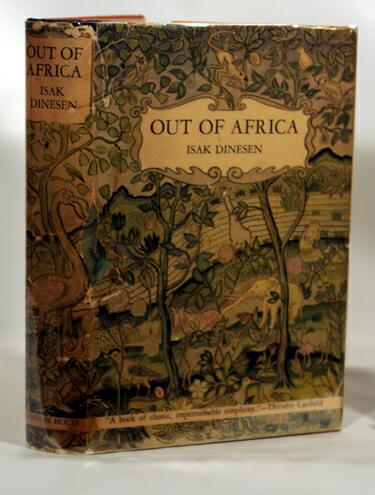
Hermès has uncovered a couple of remarkable pieces of bespoke luggage in its archives, made for famed Danish Out of Africa author Karen Blixen, aka Isak Dineson, in the 1930s. The art deco tobacco-colored crocodile skin cases, one ordered in 1930 and the other in 1935, contain every conceivable article an aristocratic author could need on an arduous journey to Africa. The famed Parisian luxury house notes that the more complex of the two took its craftsmen 368 hours to make; both feature fine inlays and engraving, with most pieces adorned with a baroness’ crown and the author’s DBF monogram for Dineson Blixen-Finecke, a combination of her maiden and married names (her full title was Baroness Karen von Blixen-Finecke).
The cases feature myriad compartments and leather boxes for spirits, smoking accessories, writing instruments , notepaper, perfume bottles, cosmetics, playing cards, jewelry, small tools, sewing items, brushes and more, with some items finished in sterling silver and tortoise shell. However, Hermès notes the the items appear to be unused and probably never made it to Kenya, where Blixen established a coffee plantation at the foot of the N’gong Hills; and therein lies something of a mystery. Noting that by December of 1930, when the first case was ordered, Blixen was somewhat down on her luck and preparing to leave Africa, Hermès thinks it unlikely she ordered it for herself and the archives are unclear. Could it perhaps have been intended as a gift from her lover, dashing big game hunter and pilot Denys Finch Hatton?
Posted at 9:12 pm by 1909ventilo, on August 5, 2010
‘Mozart’s piano’ discovered in Germany
Posted Thu Aug 5, 2010 2:29pm AEST
An early piano believed to have been played by Mozart in Germany. (AFP)
An early piano believed to have been played by Wolfgang Amadeus Mozart has surfaced in Germany and could be worth millions.
Public broadcaster SWR reports the instrument was built in 1775 and acquired in the 1980s by piano manufacturer Martin Becker in the southern German city of Baden-Baden from an antiques dealer in Strasbourg, eastern France.
When Mr Becker decided to auction the fortepiano, a music historian noticed the offer and “had a hunch it could be the same long-lost instrument Mozart played whenever he was in Strasbourg”, SWR said.
“I had the idea to offer it on eBay and maybe get between 30,000 and 40,000 euros for it,” Mr Becker told the radio station.
A historic oil painting in Vienna shows composer Joseph Haydn – a Mozart contemporary – playing what appears to be the same instrument.
The fortepiano, built by Christian Baumann, is one of eight known examples.
Mozart was said to be a fan of Baumann’s work.
SWR said auction house Christie’s confirmed the piano’s provenance in 2003 but a company spokesman said its US-based musical instrument specialists had never examined it.
The piano could be worth millions if its illustrious pedigree is established.
Posted at 5:34 pm by 1909ventilo, on August 4, 2010
One of the largest ever finds of Roman coins in Britain has been made by a man using a metal detector.
About 53,000 coins were found buried in a field in SomersetA hoard of more than 52,500 Roman coins discovered in a Somerset field has been declared treasure.
Dave Crisp, from Wiltshire, found the coins – dating from the 3rd Century AD – in April buried near Frome.
“I’ve been metal detecting since 1988 and it’s the most exciting and important find I’ve made,” he said.
A British Museum spokesman said the 160kg find was the largest single coin haul found in one pot and was probably intended as a religious offering.
Most of the coins, which are made from debased silver or bronze, are currently at the British Museum in London and includes examples from AD286 to 293 during the reign of Carausius who was the first Roman emperor to strike coins in Britain.
A small selection has gone on display at Frome Library.
Mr Crisp had earlier found a hoard of 60 silver coins in the same field before he discovered the larger pot of coins.
Posted at 10:48 pm by 1909ventilo, on August 3, 2010
Having lunch one weekend at the Wolfcreek Inn my husband and son in-law were approached to be in a music video! This is one of the pictures I took! My hubby is very comfortable at a poker table.
During the 1800s there weren’t many forms of entertainment available so men turned to card games because they were easy to understand and cards were portable.
Renegade Banker Big Iron Directed by Marc Bousatt & Produced by Brent Pearson.
Posted at 9:04 pm by 1909ventilo, on August 3, 2010
Author. Well known as the author of “Gone with the Wind,” she began working as a journalist, using the name of Peggy Mitchell for the Atlanta Journal as a feature writer. It took her ten years to write “Gone With The Wind,” then titled “Tomorrow is Another Day.” She also changed the name of the heroine, the beautiful and manipulative Southern belle, from her original choice of “Pansy” to the more evocative “Scarlett”. In addition to its staggering sales, the novel won both the Pulitzer Prize and the National Book Award in 1937
Posted at 9:07 pm by 1909ventilo, on July 30, 2010
Maybe if I woke at 4:00 am I would have enough hours in the day to figure out my blog! I still am learning, so hang in there with me! I started this blog for myself really, I wanted a place to store all the things I am interested in and I am learning about. I find history fascinating, which is actually kind of funny because I didn’t have much interest for it when I was in school! I love to do research; it’s great to be able to learn new things everyday. I am terrible at spelling and punctuation but give me a camera and “its all good!” I truly believe everything we have here on earth is borrowed as well as our time. For myself it’s really not about owning something that holds greatness, but the history and the story now that’s “everything!”
Posted at 12:39 am by 1909ventilo, on July 29, 2010
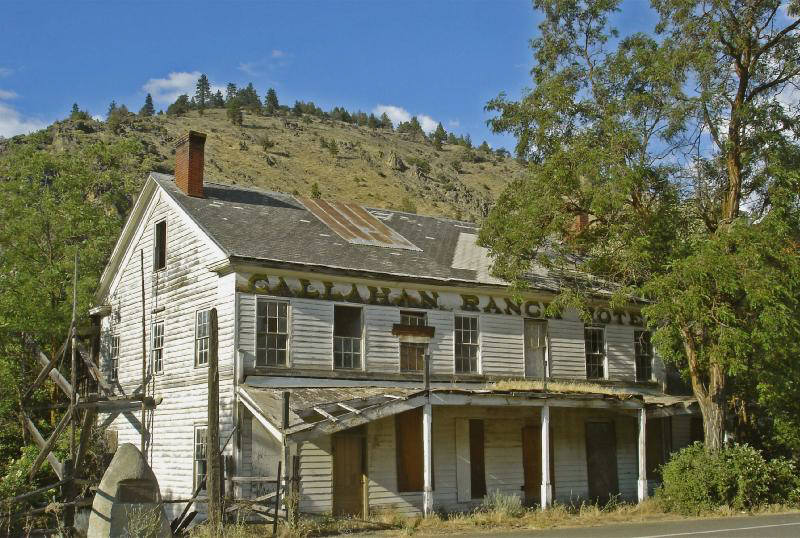
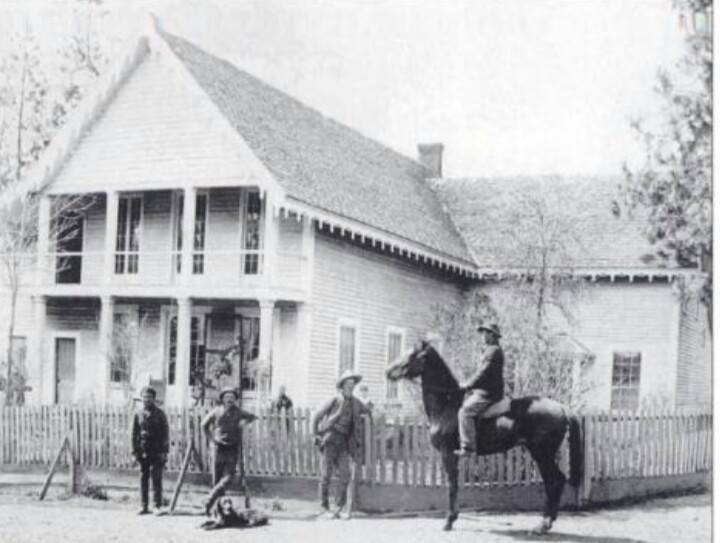
Callahan near Etna California
When I was young, I remember my mom buying cowboy boots across the street from Callahan’s; going to the Rodeo, was a ‘big deal’ in Scott Valley. Those boots were so special to her; she had those boots her whole life! The picture below of the two room school house is where I went to school in Quartz Valley. Fond memories….
thinking of Sie the old man who everyday sat on the main street corner waving at everyone who went by, everybody was so friendly, those were the days!
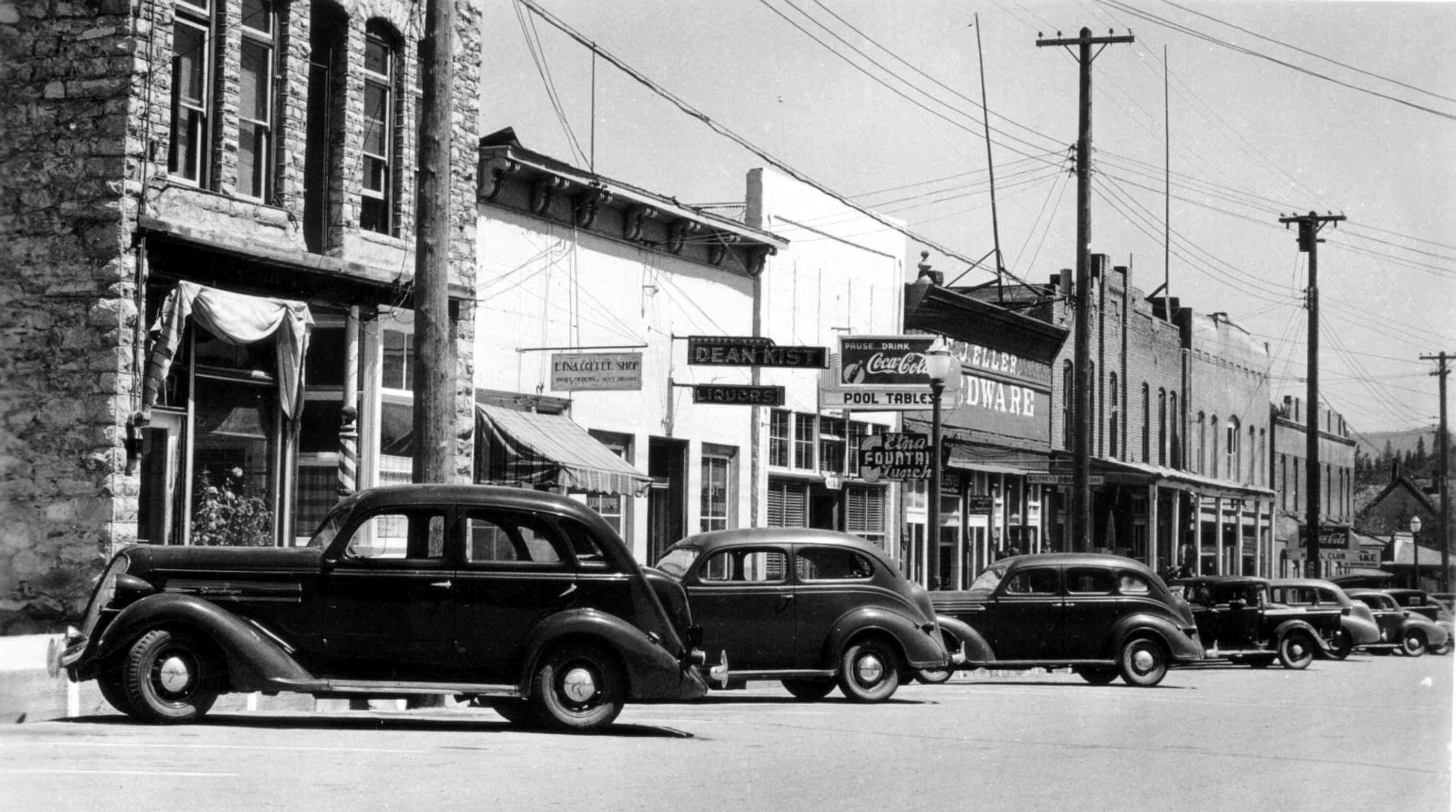
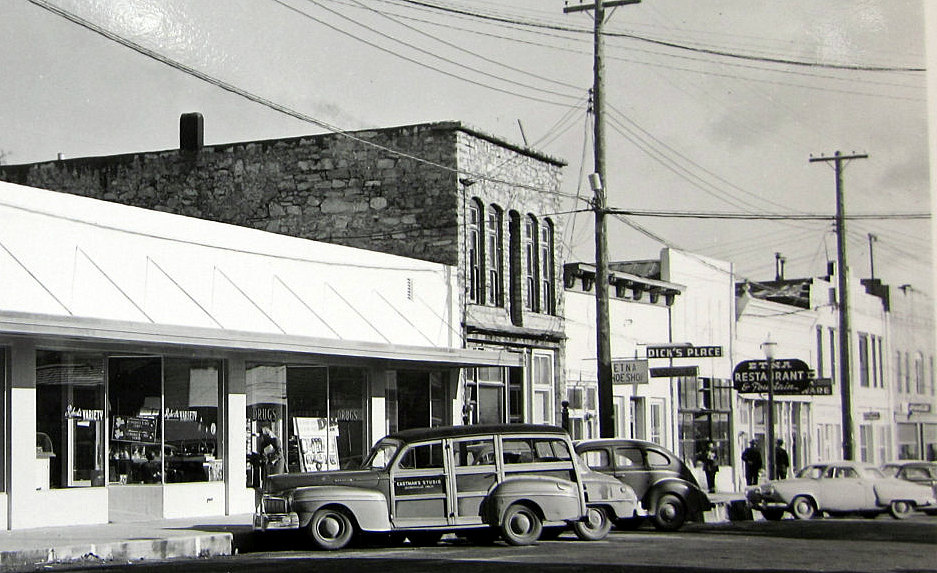
Etna California,
I Love this Video, everybody is from somewhere…. glad I’m from “Small Town USA”.
Small Town USA by Justin Moore
Some old pictures I found on the internet of Etna California. I grew up there in the 70’s obviously these photos
* note. “Today Callahan is just a shadow of what it once was, and you can get a glimpse into the past by looking at the old buildings. Steel plates cover the windows of the former Wells Fargo building, which was also one of the Denny Bar stores. Farrington’s Mercantile and General Store was established in 1860 and is the oldest continuous family run business in Scott Valley.
The photographs apparently were taken between 1919 and the early 1930s, well before Adams — who is known as the father of American photography — became nationally recognized in the 1940s, Streets said.
“This is going to show the world the evolution of his eye, of his talent, of his skill, his gift, but also his legacy,” Streets said. “And it’s a portion that we thought had been destroyed in the studio fire.”
How these 6.5 x 8.5 inch glass plate negatives of famous Yosemite landscapes and San Francisco landmarks — some of them with fire damage — made their way from Adams collection 70 years ago to a Southern California garage sale in 2000 can only be guessed.
The person who sold them to Norsigian at the garage sale told him he bought them in the 1940s at a warehouse salvage in Los Angeles.
Photography expert Patrick Alt, who helped confirm the authenticity of the negatives, suspects Adams carried them to use in a photography class he was teaching in Pasadena, California, in the early 1940s.
“It is my belief that he brought these negatives with him for teaching purposes and to show students how to not let their negatives be engulfed in a fire,” Alt said. “I think this clearly explains the range of work in these negatives, from very early pictorialist boat pictures, to images not as successful, to images of the highest level of his work during this time period.”
Alt said it is impossible to know why Adams would store them in Pasadena and never reclaim them.
The plates were individually wrapped in newspaper inside deteriorating manila envelopes. Notations on each envelope appeared to have been made by Virginia Adams, the photographer’s wife, according to handwriting experts Michael Nattenberg and Marcel Matley. They compared them to samples provided by the Adams’ grandson.
While most of the negatives appear never to have been printed, several are nearly identical to well-known Adams prints, the experts said.
Meteorologist George Wright studied clouds and snow cover in a Norsigian negative to conclude that it was taken at about the same time as a known Adams photo of a Yosemite tree.
In addition to Yosemite — the California wilderness that Adams helped conserve — the negatives depict California’s Carmel Mission, views of a rocky point in Carmel, San Francisco’s Fisherman’s Wharf, a sailing yacht at sea and an image of sand dunes.
“The fact that these locations were well-known to Adams, and visited by him, further supports the proposition that all of the images in the collection were most probably created by Adams,” said art expert Robert Moeller.
Moeller said that after six months of study, he concluded “with a high degree of probability, that the images under consideration were produced by Ansel Adams.
Silver tarnishing on the negatives also helped date the plates to around the 1920s, Alt said.
“I have sent people to prison for the rest of their lives for far less evidence than I have seen in this case,” said evidence and burden of proof expert Manny Medrano, who was hired by Norsigian to help authenticate them. “In my view, those photographs were done by Ansel Adams.”
Norsigian, who has spent the last decade trying to prove the worth of his discovery, is now ready to cash in — by selling original prints of the photographs to museums and collectors.
“I have estimated that his $45 investment easily could be worth up to $200 million,” Streets said.
It was written at the time of the 1745 Scottish Jacobite uprising. Two Scottish brothers were captured by English soldiers and thrown into Carlisle jail. One was to be sentenced to death for his part in the revolt while the other was to be released. The younger brother had a sweetheart by Loch Lomond instantly after being executed and therefore be home first.
Execution and release of the two prisoners was scheduled for the same time. The freed man was allowed to go back home, taking the normal way, The High Road. His sibling however, according to an old Celtic belief that if you die away from your homeland you return by an underground spirit route called The Low Road, would be transported back to Loch Lomond instantly after being executed and therefore be home first.
You’ll take the high road
And I’ll take the low road
And I’ll be in Scotland afore ye
But me and my true love will never meet again
On the Bonny Bonny Banks of Loch Lomond.
















 1909ventilo's Blog